From Guide to Practice: QFINITY at the Vimachem Pharma Digitization & AI Conference in Athens
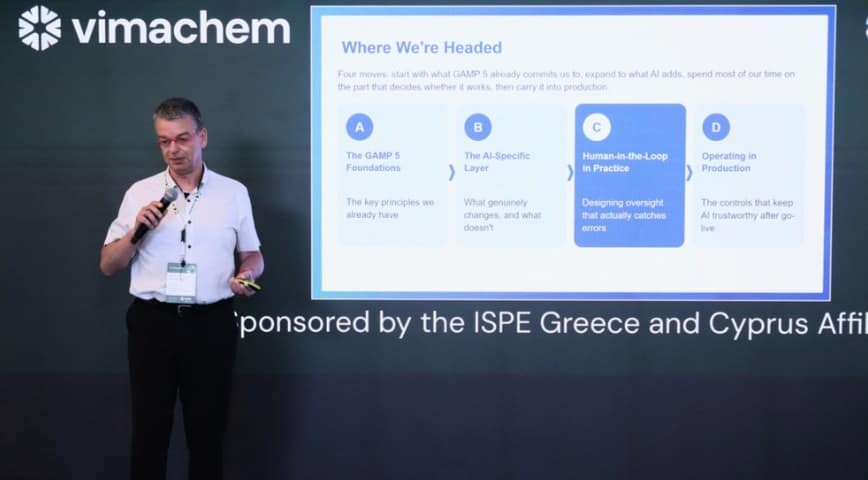
On 24 September 2026, Vimachem invited around 50 manufacturers, partners and experts to the Pharma Digitization & AI Conference at the Conrad Athens. The ISPE Greece and Cyprus Affiliate supported the conference. The agenda covered the draft EU GMP Annex 22, the ISPE GAMP Guide on artificial intelligence and case studies from manufacturing. Frank Henrichmann, Chair of the ISPE GAMP Global Steering Committee, spoke on behalf of QFINITY about how to validate AI-supported computerized systems in GMP. His starting point was that validation does not start from scratch. It builds on the principles that GAMP 5 already describes today.
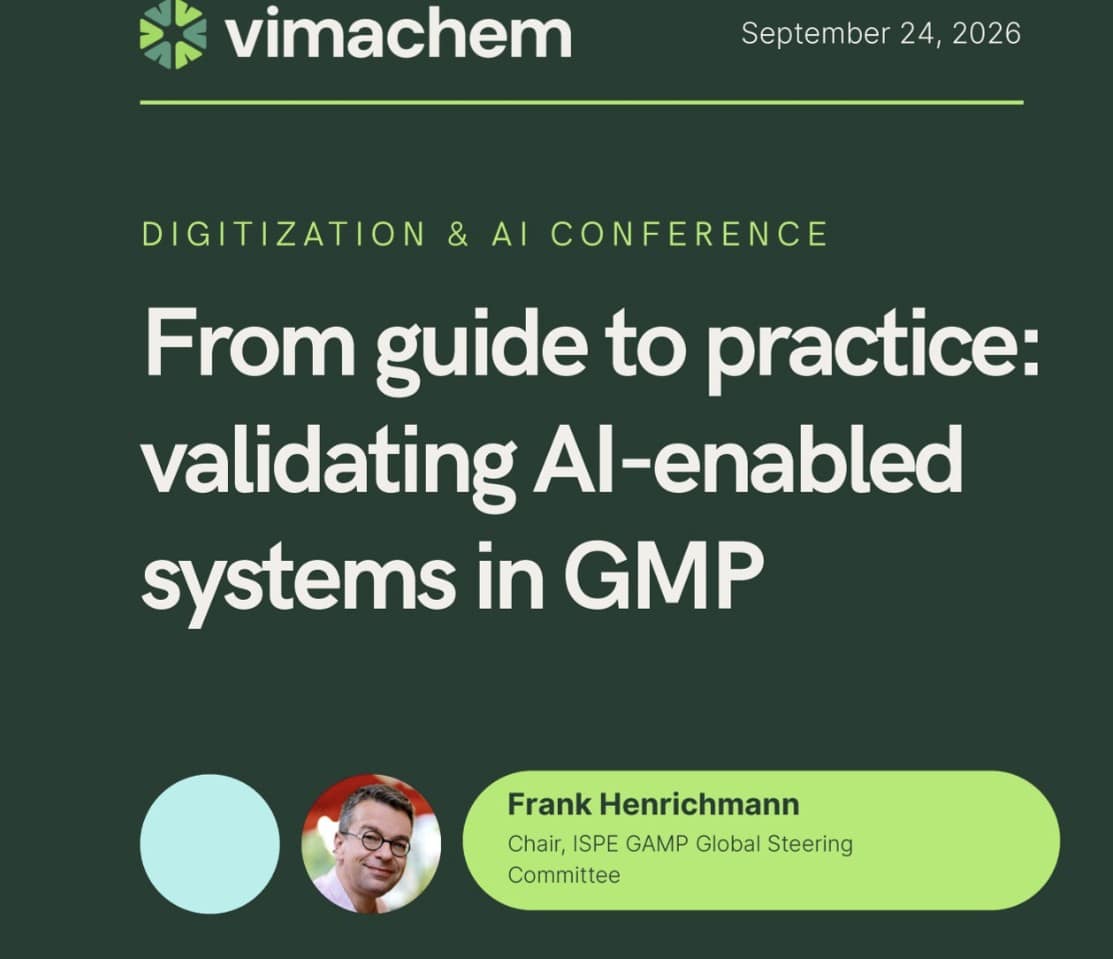
The conference centered on a question that has been on the agenda of the GAMP committees since the July 2025 draft of Annex 22. What does AI change about validation, and what does it leave unchanged? The title of the talk follows the vocabulary of the ISPE GAMP Guide, which refers to AI-enabled computerized systems. In our reading, the distinction runs one level deeper: The model is verified against its specification. The AI-supported computerized system is validated in its process, against the intended use. This separation allows the tools described in GAMP 5 to remain in use. The only addition is the layer for the specific properties of the model.
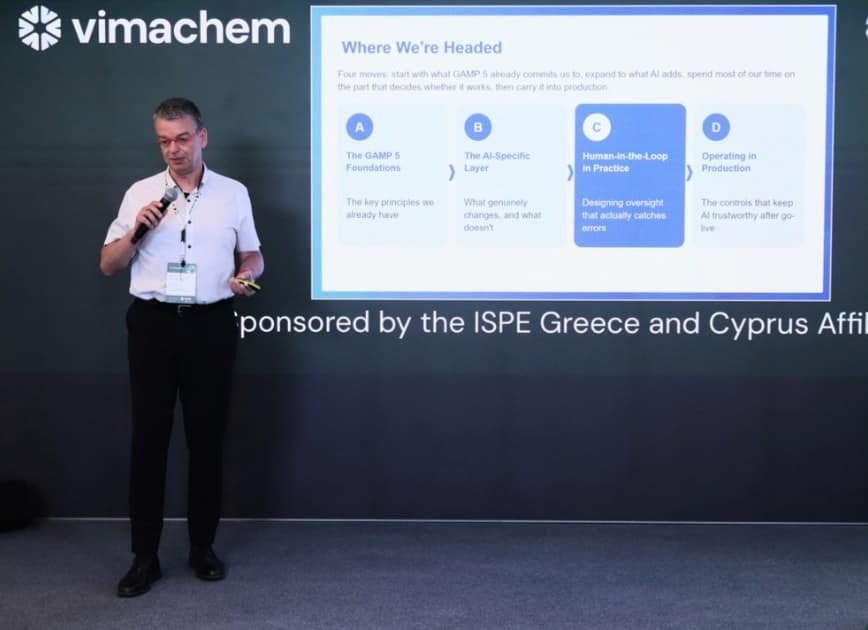
Four moves from GAMP 5 to operation
The talk followed four moves, as the slide behind the speaker showed: start with the foundations from GAMP 5, add what AI brings, spend most of the time on the part that decides whether it works, and carry it all into operation.
The test for the third move: Would the reviewer notice an error made by the model, or merely confirm the result put in front of them?
Context: Annex 22, the GAMP AI Guide and the regulators’ position
The draft EU GMP Annex 22 was published in July 2025 and open for consultation until October 2025. For static models in critical applications, it provides for a documented intended use, acceptance criteria, independent test data and monitoring in operation. For generative AI, it provides for use outside critical applications only, as long as qualified personnel take responsibility for the results. The ISPE GAMP AI Guide supplies the accompanying methodology. Both documents were on the agenda in Athens. The draft signals the direction of the requirements on the model. The guide describes how a company implements them across the lifecycle.
The joint EMA and FDA guiding principles of 14 January 2026 assess the system as a whole, including the interaction between humans and AI. The third move of the talk takes up this approach.
QFINITY in Athens
QFINITY has worked on these questions for years in GAMP committees and in projects involving AI applications in GxP, as well as in its own publications. We set out our position on Human Oversight in detail in the September 2026 iSpeak article “Human-in-the-Loop as an Illusion of Control?”. Our service page describes how we validate AI-supported systems.
Frank Henrichmann is Chair of the ISPE GAMP Global Steering Committee and Senior Executive Consultant at QFINITY. Our thanks go to Vimachem and the ISPE Greece and Cyprus Affiliate for the invitation and the expert discussions on AI in manufacturing.