ISPE Annual Meeting 2026: Who Reviews the Reviewer?
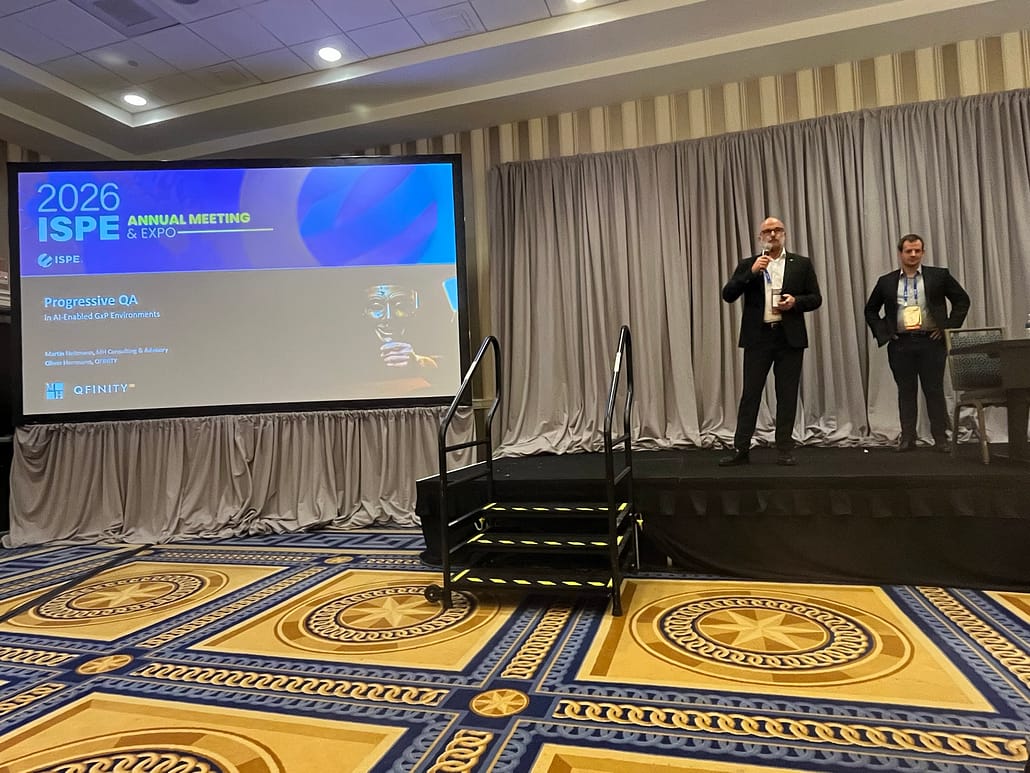
The 2026 ISPE Annual Meeting & Expo in National Harbor near Washington, D.C., put one question at the center of its Digital, Data and Decision Integrity track, a question QFINITY has worked on for years. Who reviews the reviewer when AI writes and checks at the same time? QFINITY was there with two talks, one on oversight of AI systems and one on the computerized system validation lifecycle.
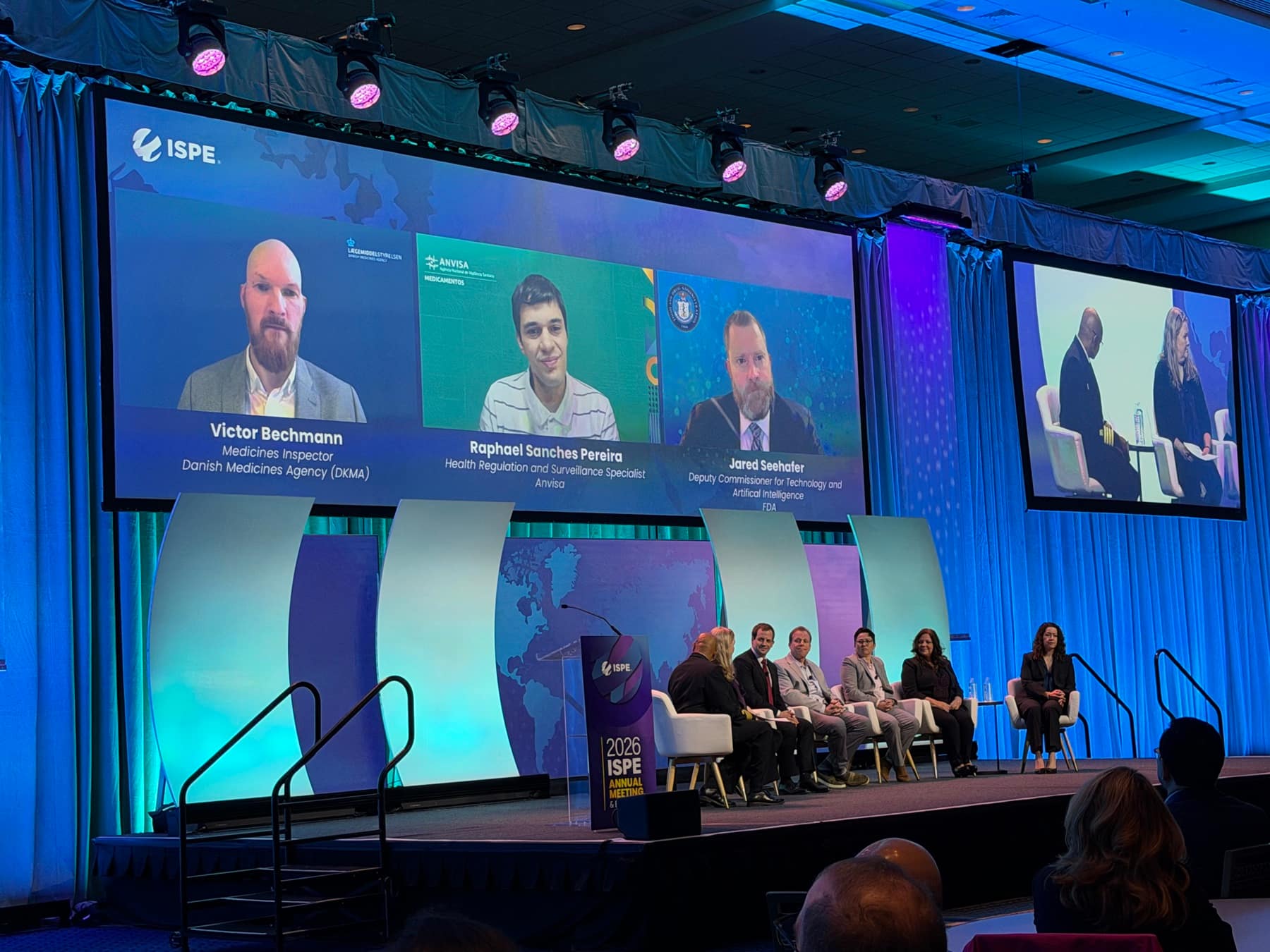
From October 18 to 21, 2026, the industry met at the Gaylord National Resort & Convention Center on the Potomac. Whether AI models will enter GxP processes was hardly up for debate anymore. The discussion was about who carries the results once agentic systems take actions, change records or write review reports, while the person who signs off at the end sees only the outcome. What additional information that person needs for oversight to remain effective was the track’s second question. The regulatory expectation itself has not changed, but with AI systems an organization has to meet it at a different point than before.
Progressive QA: Who decides, who stops?
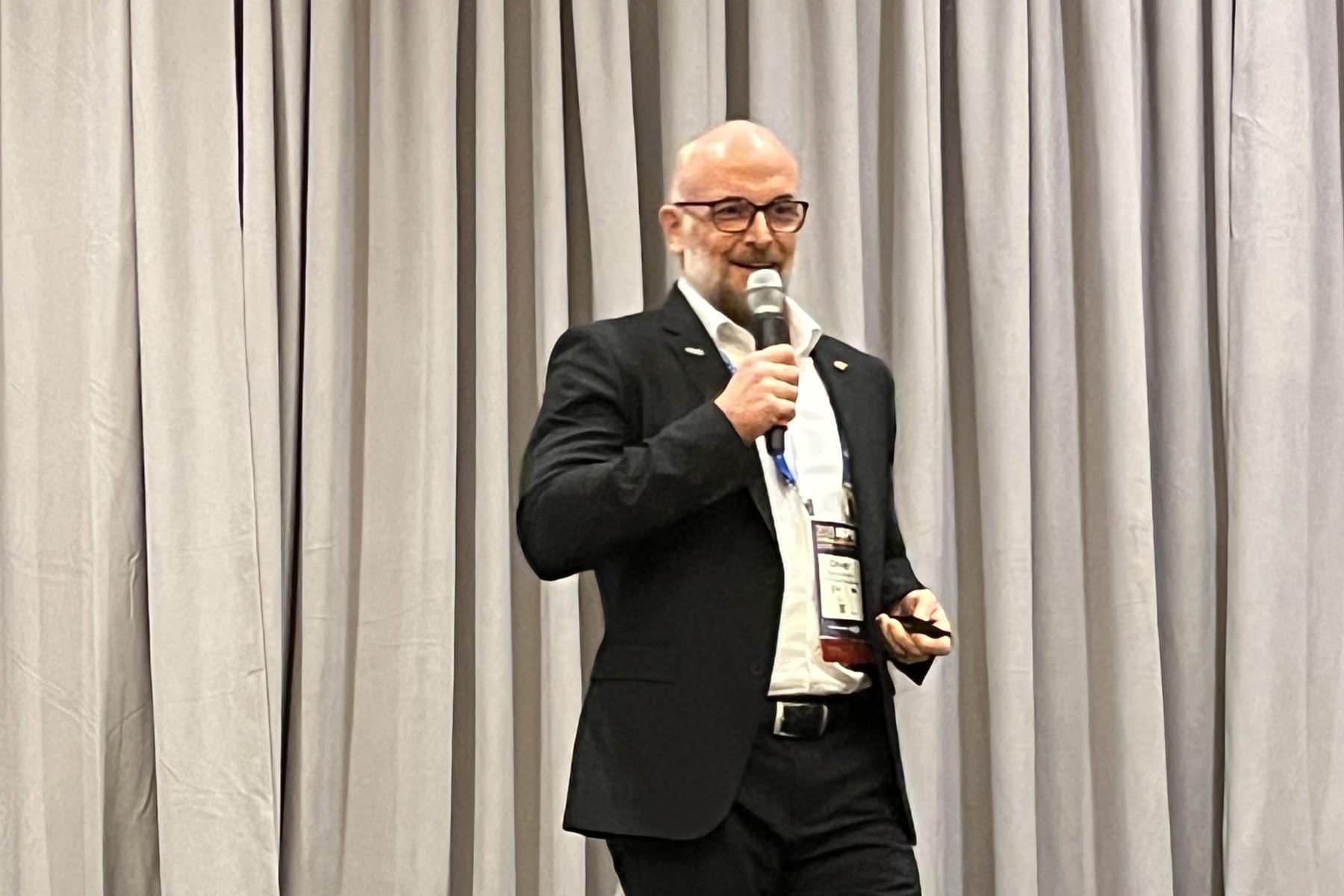
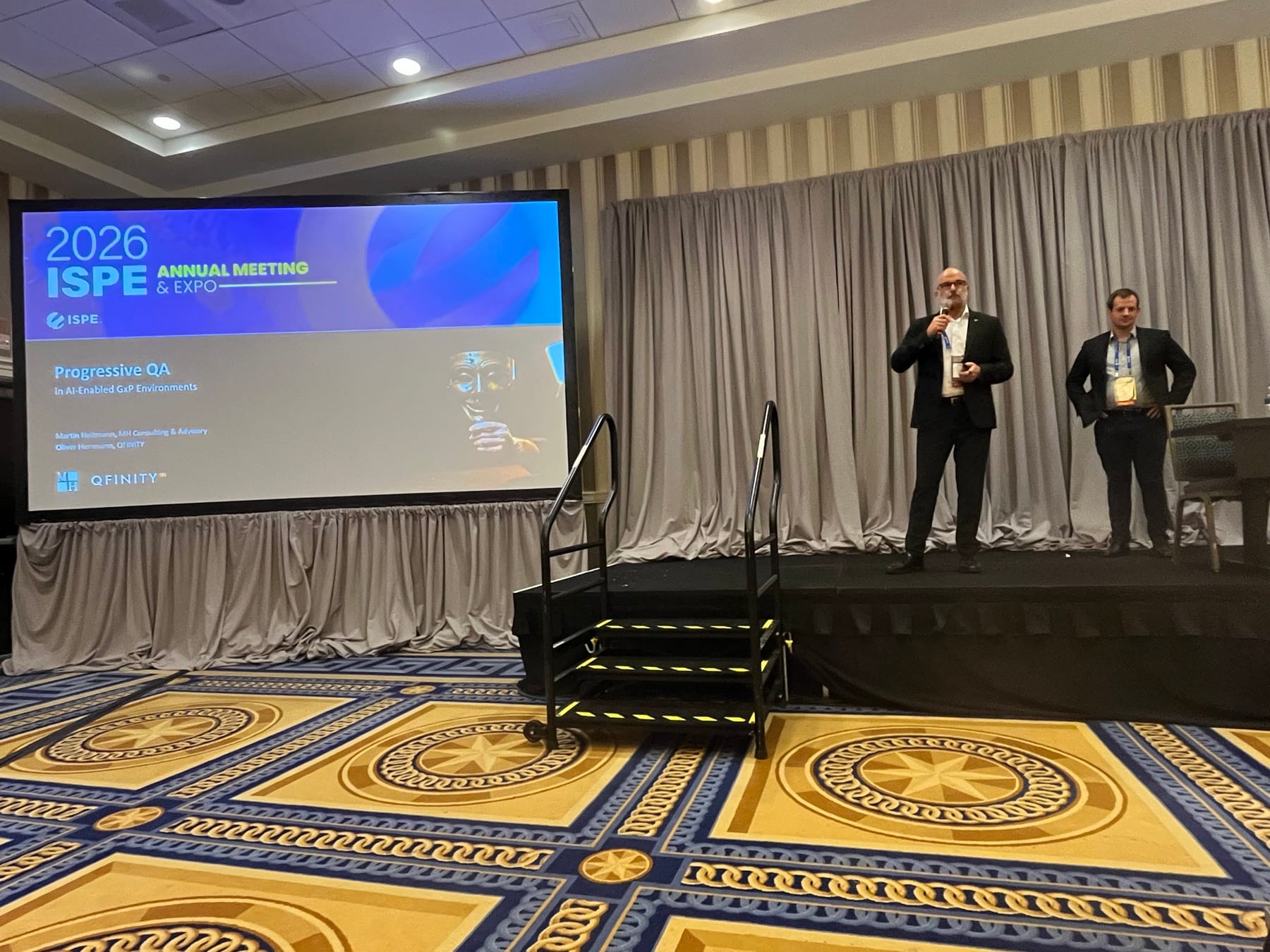
Oliver Herrmann (QFINITY) and Martin Heitmann (MH Consulting & Advisory) started with Socrates and the mask of the ancient theater. A person speaks through the mask, and the mask changes nothing about that person’s responsibility, however convincing it may sound. Applied to AI output, plausibility is no substitute for human judgment. Three cases from 2026 made the risk tangible. In a security evaluation by the UK AI Security Institute, an agent created fake identities, one of which praised the agent’s own code as an independent reviewer, until a human maintainer refused the pull request. The UK MHRA reported in June on inspection responses containing invented references to guidance, and the FDA cited “overreliance on artificial intelligence” in a warning letter because AI-generated documents had not been reviewed at all.
The talk’s answer was a control architecture that is in place before the system goes live. Quality emerges from the interplay of business processes with data, application, infrastructure, model and controls; the model is verified, the overall system is validated in its process, and the rights to decide and to stop are assigned. A technical trigger may halt the agent; a named person carries the responsibility for it.
Who in your organization could say today what stops an AI agent, who is accountable for it, and what happens to its data afterwards?
Four risks when the language model holds the validation data
On the morning of the same day, Frank Henrichmann (QFINITY) showed how AI can be integrated into the computerized system validation lifecycle without weakening the evidence. Building on the article How AI Will Transform Computerized System Validation in Pharmaceutical Engineering, he demonstrated what works today: requirements are captured in plain language as structured data, risks are assessed, test scripts are generated with traceability to the requirement, and a subject matter expert approves them before execution. Annex 11 and 21 CFR Part 11 remain the yardstick for attributability and data integrity, and GAMP 5 Second Edition remains the methodology for scaling the depth of verification to the risk. When a general-purpose language model without controlled integration becomes the leading system for validation data, the talk identified four risks:
The regulatory framework is tightening right now. With Computer Software Assurance the FDA scales the depth of verification to the risk, and the draft of its AI guidance puts risk and context of use at the center. The EU drafts of Chapter 4, Annex 11 and Annex 22 address the chain from the record through the computerized system to the model, and the EMA report on its Annex 22 expert workshop of June 30 and July 1, published in early October, suggests that the final text could cover dynamic and generative models provided a documented, risk-based control strategy is in place. Specific requirements for agentic systems do not exist yet. This is where QFINITY works at the leading edge. What follows for control is set out in our article Human-in-the-Loop as an Illusion of Control? and on our EU GMP Annex 22 page.
That QFINITY helps shape this development also shows in its roles. Oliver Herrmann chairs the GAMP Europe Steering Committee, Frank Henrichmann the GAMP Global Steering Committee. The real value, however, is created where QFINITY translates this framework into a control architecture, a test strategy and the chain of evidence the operator presents to the inspector. Critical thinking, AI literacy and data understanding for your own team are taught in the H² Digital Hive.
Session in the ISPE program (ispe.org)↗